Granny flat excavation and site works in Canberra: what to price by name
Excavation and site works are where a granny flat price can move after signing. Ask for 3 items to be priced by name: rock excavation, service trenches and retaining walls. A certifier inspects the footing excavation, formwork and steel before any concrete is poured.
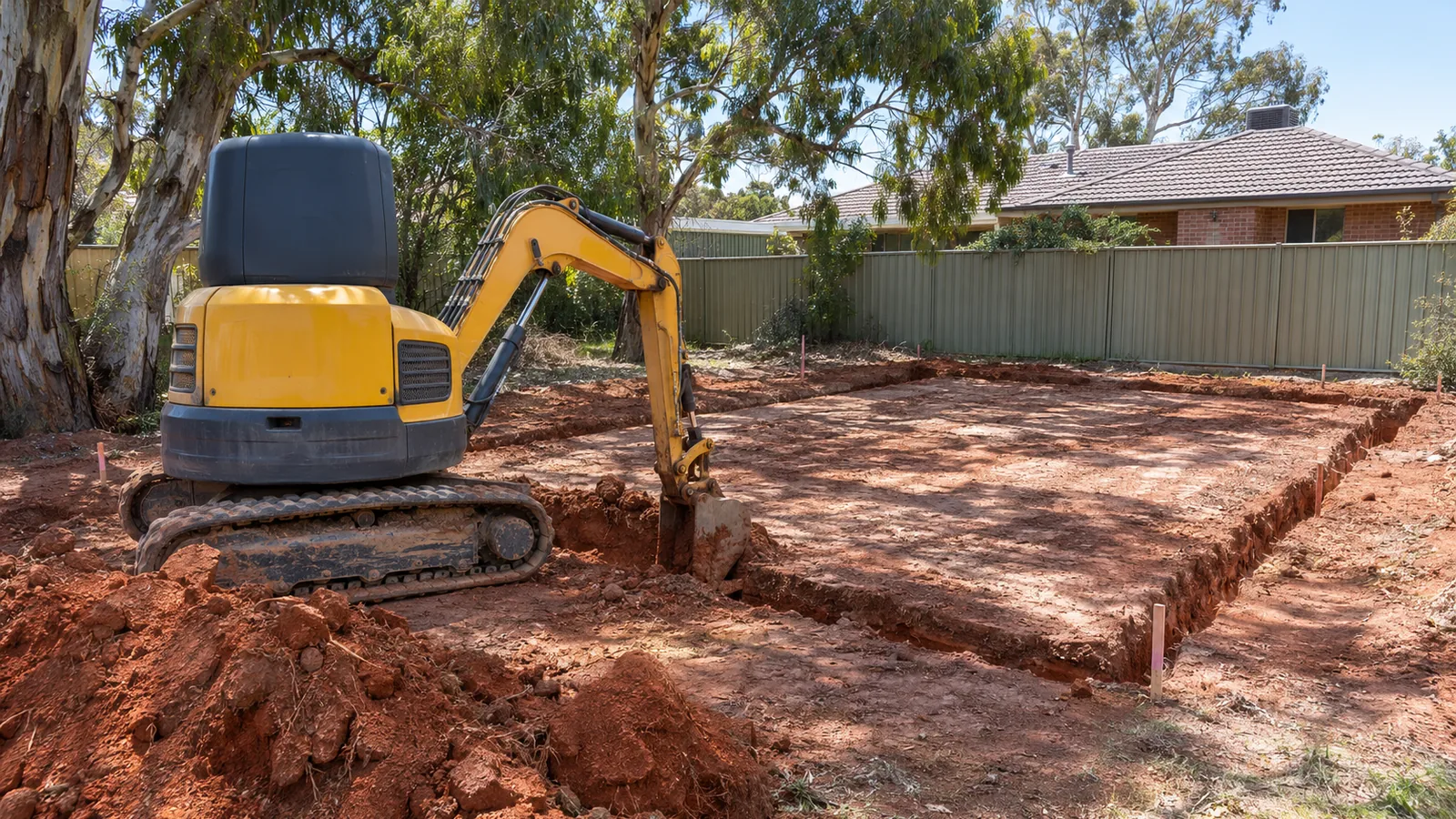
What counts as site works on a granny flat?
Site works are everything done to the ground before and around the building. On a typical Canberra granny flat that means:
- clearing the pad and cutting or filling to make it level;
- excavating for footings and any slab edge beams;
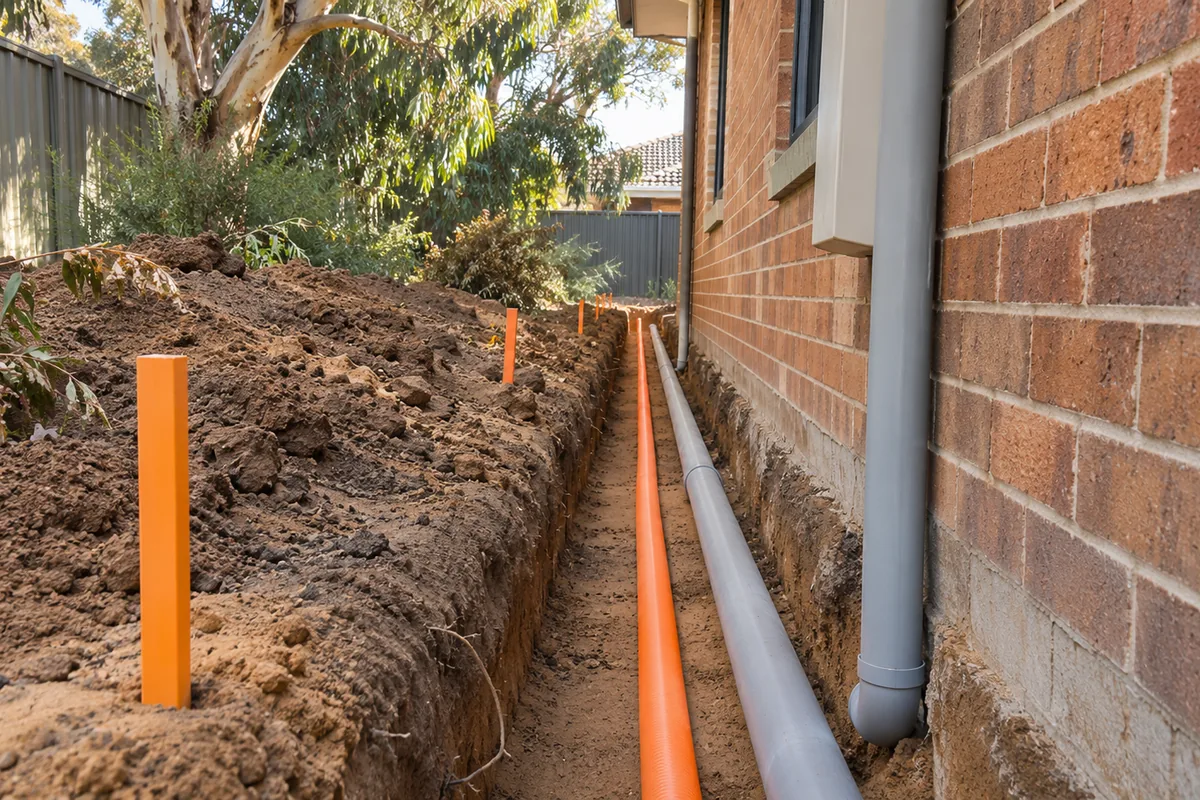
- trenches for water, sewer, stormwater, power and data;
- retaining walls where the block falls;
- paths, a driveway or a crossover, where needed.
Each of these can be priced as a named item or buried in a total. Named items are easier to compare. Our pricing page shows what sits inside a granny flat price.
What happens if the excavator hits rock?
Nobody knows what is under a block until it is dug. If the machine meets rock or very hard ground, excavation takes longer and may need different equipment. That is why quotes often carry an allowance for it, and why the contract should say who pays when the allowance is used up.
Ask these questions of any quote:
- Is there a rock allowance, and how is it measured?
- What happens if the real cost is more or less than the allowance?
- Has anyone looked at the soil, for example with a test hole or an engineer's report?
Our quote comparison guide explains how to set two quotes side by side.
How do you find what is underground?
Before any digging near underground services, the people doing the work must advise the utility providers of the proposed works. WorkSafe ACT says excavation near energised electrical installations is high-risk construction work and needs a safe work method statement. Use Before You Dig Australia to get plans of the underground lines and pipes at your address.
If a cable is struck, WorkSafe ACT says the work must stop immediately, WorkSafe ACT must be told, and the relevant provider contacted. This is the builder's duty, but you should know it. Ask your builder who requests the service plans and how the trench route is marked on site.
The utilities guide covers the connection decisions that set the trench lengths.
Why do retaining walls need a separate question?
On a block that falls away, a flat pad often needs a retaining wall. ACT guidance lists retaining walls, paving and fences among the items that statutory warranties do not apply to. So ask who designs and builds the wall, who warrants it, and whether it is inside the contract price.
| Site item | Ask |
|---|---|
| Rock | Allowance and how it settles |
| Trenches | Length and who locates services |
| Retaining | Design, warranty, in the price or not |
| Paving | Included or separate |
Which inspection covers the excavation?
The first mandatory certifier inspection is before footing concrete is poured, when the excavation, formwork and steel reinforcing are complete. If the footing trenches are not right, this is the point where it is caught. Our inspections guide lists every stage.
ACT Planning also notes that other approvals may be needed for driveways or tree removal, so check these before the machine arrives.
How does access change the work?
A machine that fits down the side of the house digs quickly. A narrow side path may mean a smaller machine, hand digging or carrying materials by hand. That adds time. Read our guide to narrow access before you accept a quote that says nothing about it.
Established areas such as Woden Valley often have mature trees and older services near the rear boundary. Mention them early.
What should you do before you ask for quotes?
- Take photos of the side access, the back yard and any visible services.
- Note the slope and where water runs in heavy rain.
- Mark where you want the flat and where services enter the house.
- Ask each builder to price rock, trenches and retaining as named items.
That gives every builder the same starting information, so the quotes are easier to compare.
What happens when you enquire?
- You send the address, the slope and the access width.
- We note what site work the block is likely to need.
- You get a written list of site items to compare against other quotes.
For a larger flat on a sloping block, see our two-bedroom service page. The contract guide covers how to write site items into the price.
Questions and answers
Does rock excavation cost extra on a Canberra granny flat?
Who checks for underground services before digging?
What if a cable is hit during excavation?
Are retaining walls covered by the statutory warranty?
When is the excavation inspected?
Sources, checked 15 November 2026: ACT Planning, during construction, ACT Planning, hiring a builder, WorkSafe ACT, power cable strike during excavation.